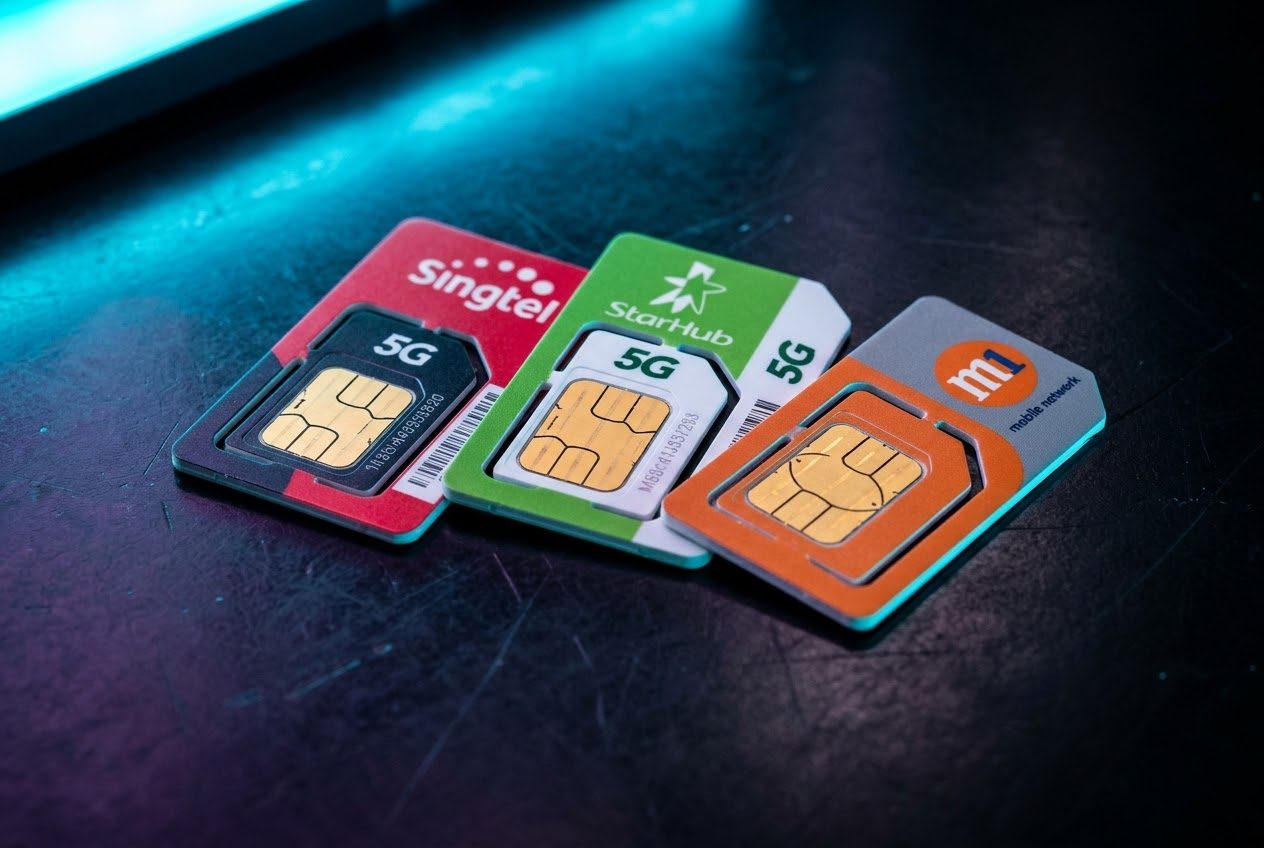
 SIM Plans
Best 5G SIM Plans in Singapore
6 min read
Everything you need to know in one place — what 5G actually is, how it leaps beyond 4G LTE in speed and latency, the current state of Singapore's island-wide rollout across Singtel, StarHub, and M1, and the real-world download speeds residents can expect to see on their devices throughout 2025.
Reuben Koh
Senior Network Analyst, singaloadd
Fifth-generation wireless is not simply "faster 4G". It is a fundamental rearchitecting of mobile networks—new spectrum bands, new radio access technology (NR), and a software-defined core that makes the network programmable. Here's what matters for Singapore users.
Non-Standalone (NSA)
The 5G radio is bolted onto an existing 4G LTE core. Faster data, but latency is still anchored to 4G timings (~20–30ms). SG operators ran NSA from 2021–2023. Handover is seamless but the full low-latency promise remains unrealised.
Standalone (SA)
A fully independent 5G core handles all signalling. True sub-10ms latency, network slicing for enterprise, and native support for IoT use cases. Singtel and JVCo activated SA cores in 2024. SA coverage is growing but not yet island-wide.
From IMDA's first spectrum consultations in 2019 to full Standalone core deployment in 2024, Singapore's 5G rollout has been one of the world's most structured and policy-driven. Here's the definitive sequence of milestones.
The Infocomm Media Development Authority begins formal consultations, setting Singapore on course to be one of Asia's first 5G-ready markets.
Two nationwide 5G networks are greenlit. Singtel wins one licence; StarHub and M1 form a joint venture (JVCo) to share buildout costs and spectrum. Both receive 3.5 GHz (n78) and mmWave allocations.
Singapore's first commercial 5G services appear. Priority zones include the Central Business District, Marina Bay Sands precinct, and Changi Airport terminals.
Half of Singapore's outdoor footprint is now blanketed in 5G. HDB estates in Jurong, Tampines and Woodlands are progressively added to coverage maps.
Both networks hit the IMDA-set 95{a47e523b6672d499e1aa3e4063812c1427e51fb8ba1021677b2e6dbe3ccdd228} outdoor coverage target ahead of schedule. Indoor and in-building coverage programs accelerate across MRT stations, malls, and hospitals.
Moving beyond Non-Standalone (NSA) architecture that relied on 4G anchors, both operators bring up true 5G Standalone cores—enabling network slicing, sub-5ms latency, and enterprise IoT pilots at one-north and Tuas Port.
High-band mmWave rollout deepens in high-density corridors, delivering multi-Gbps peak speeds for events, retail and mixed-use developments. 5G subscriber base crosses 2 million.
Singapore's compact geography makes near-total 5G coverage theoretically achievable—but physics and building density create pockets where your bars silently revert to 4G.
Both operators have densified these zones with multiple small cells and mmWave nodes.
Coverage exists but indoor signal can be inconsistent depending on building materials.
IMDA's coverage mandate applies to outdoor areas; in-building rollout is ongoing but not legally required.
Singtel
singtel.com/5g-coverage
Filter by 5G SA vs NSA layers. Most detailed map.
StarHub
starhub.com/coverage
Zoom to street level. Shows in-building signal too.
M1
m1.com.sg/coverage
Uses the JVCo network—same coverage as StarHub.
Singapore's IMDA-commissioned Ookla Speedtest Intelligence reports and independent singaloadd field tests (conducted across 12 locations, Q1 2025) inform the figures below. Real-world performance varies by time of day, device, and your distance from the nearest 5G node.
| Metric | 5G (n78 Sub-6) | 4G LTE | Edge |
|---|---|---|---|
| Peak Download Speed | Up to 4.2 Gbps | Up to 150 Mbps | 5G wins |
| Typical Download (Urban) | 300–900 Mbps | 20–80 Mbps | 5G wins |
| Latency | 1–10 ms | 30–50 ms | 5G wins |
| Upload Speed | Up to 500 Mbps | Up to 50 Mbps | 5G wins |
| Device Density (per km²) | 1,000,000 | 100,000 | 5G wins |
| Network Availability (SG) | ~95{a47e523b6672d499e1aa3e4063812c1427e51fb8ba1021677b2e6dbe3ccdd228} outdoor | ~99{a47e523b6672d499e1aa3e4063812c1427e51fb8ba1021677b2e6dbe3ccdd228} all zones | 4G holds |
| Battery Impact | Higher drain | Moderate drain | 4G holds |
| Indoor Penetration | Varies by band | Strong & stable | 4G holds |
Sources: Ookla Speedtest Intelligence SG Q4 2024; singaloadd field data Q1 2025; IMDA 5G coverage reports. Figures represent median measurements — your mileage will vary.
Not all 5G phones are equal. A device must support Band n78 (3.5 GHz) to access Singapore's primary 5G network. Regional variants often differ from US models in mmWave support. Here's what to look for.
singaloadd Editorial Standard
All technical figures, operator milestones, and coverage descriptions in this guide are verified against IMDA public filings, operator press releases, and independently conducted field tests. We update this guide quarterly. Last reviewed: April 2025. This guide is informational and does not constitute an endorsement of any specific operator or device.
Practical guides for navigating Singapore's mobile landscape — no jargon, no filler.
SIM Plans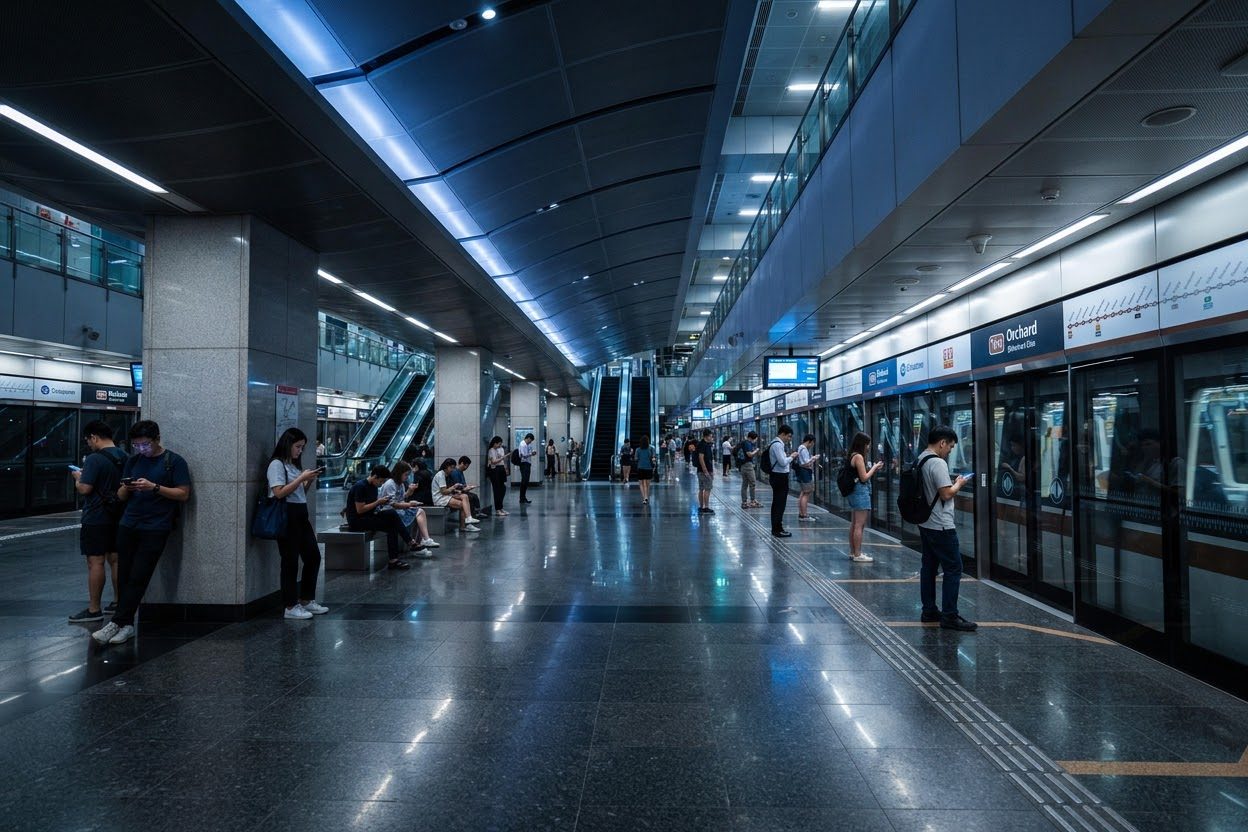 Coverage
 Home Broadband
Singapore's Mobile Network, Decoded. Guides, comparisons, and top-up tools for savvy SIM users across the Lion City.
© 2026 singaloadd. All rights reserved.